
Cervical Radiculopathy (Pinched Nerve in the Neck) Treatment on the Gold Coast
Pain shooting down your arm, pins and needles in your fingers, or weakness that's making everyday tasks harder — a pinched nerve in the neck is one of the most disruptive conditions we see at Head, Neck & Balance Clinic. The good news is that the vast majority of cases respond well to conservative care, without the need for injections or surgery. At our clinic in Varsity Lakes, we provide a thorough clinical assessment and structured, evidence-based treatment to get you on the right track as efficiently as possible.
What Is Cervical Radiculopathy?
Cervical radiculopathy — commonly called a pinched nerve in the neck — occurs when a nerve root in the cervical spine becomes compressed or irritated as it exits the spinal column. This compression disrupts the nerve's normal function, producing a characteristic pattern of pain, tingling, numbness or weakness that travels from the neck into the shoulder, arm or hand.
The condition most commonly affects people in their late forties to mid-fifties, with an estimated incidence of around 83 per 100,000 people. The C6 and C7 nerve roots are the most frequently involved levels, meaning symptoms often affect the forearm, thumb, index and middle fingers. While it can feel alarming — particularly when arm pain is severe — the prognosis for cervical radiculopathy is generally favourable. Over 85% of acute cases resolve without specific treatment within 8–12 weeks, and most patients maintain substantial improvement at two to three years.
What Causes a Pinched Nerve in the Neck?
There are two primary causes of cervical radiculopathy, and understanding which is driving your symptoms influences how we approach treatment.
Cervical disc herniation. The intervertebral discs act as cushions between the vertebrae of the neck. When the soft inner material of a disc pushes outward — most often posterolaterally — it can compress the exiting nerve root directly. Disc herniation accounts for approximately 25% of cervical radiculopathy cases and tends to present more acutely, often in younger patients.
Cervical spondylosis. This is the more common cause, responsible for the majority of cases. Spondylosis refers to age-related degenerative changes in the cervical spine — including bone spur formation (osteophytes) and narrowing of the foraminal openings through which nerve roots exit. These changes develop gradually and may produce a more insidious onset of symptoms.
Other contributing factors include:
Sustained or awkward postures placing repetitive stress on the cervical discs and joints — particularly relevant in desk-based work environments common across the Gold Coast
Acute trauma such as whiplash, which can herniate a disc or inflame a nerve root directly
Reduced cervical range of motion increasing mechanical load on specific segments
General deconditioning of the deep neck musculature, reducing spinal support
It's worth noting that the degree of degenerative change visible on an MRI does not reliably predict how severe your symptoms will be — imaging findings must always be interpreted alongside your clinical picture.
Common Symptoms of a Pinched Nerve in the Neck
Symptoms of cervical radiculopathy are typically felt in a pattern that follows the affected nerve root. They may include:
Arm pain — often described as sharp, burning or electric, and typically worse than the neck pain itself
Pins and needles or numbness in the hand or fingers
Neck pain and stiffness
Weakness in specific arm or hand muscles
Reduced reflexes at the elbow or wrist
Shoulder blade or upper back pain
Symptoms that worsen with certain neck positions or prolonged sitting
Temporary relief when raising the arm above the head (shoulder abduction relief sign
Research shows that arm pain is present in almost all cases (99.4%), with sensory changes in 85%, neck pain in nearly 80%, reflex changes in 71%, and motor weakness in 68% of patients. If you are experiencing any combination of these, a thorough assessment is the essential next step.
How Is Cervical Radiculopathy Diagnosed?
Diagnosis is primarily clinical — based on your history, symptom pattern and physical examination findings. At Head, Neck & Balance Clinic, we follow an evidence-based assessment process.
Your history will be taken in detail: the location and character of your arm pain, what aggravates or relieves it, whether there has been any trauma, and how long symptoms have been present. We also screen carefully for red flags — including progressive motor weakness, bilateral neurological symptoms, and any signs of spinal cord involvement (myelopathy) — which would change our management pathway significantly.
The physical examination includes neurological testing (reflexes, sensation and muscle strength), cervical range of motion assessment, and a cluster of specific provocation tests. The Spurling's Test is highly specific for cervical radiculopathy (approximately 93% specificity), meaning a positive result strongly supports the diagnosis. The Upper Limb Neurodynamic Test is used to assess neural tissue sensitivity and has high sensitivity, making it valuable for screening. The Cervical Distraction Test can help confirm nerve root involvement by temporarily reducing compression. When used together as a cluster, these tests substantially increase diagnostic confidence.
Imaging is not always necessary in the first instance. MRI is the preferred modality when imaging is indicated and should be considered if neurological symptoms are abnormal or if symptoms have not improved after 4–6 weeks of conservative care.
How Can an Osteopath Help with a Pinched Nerve in the Neck?
Both international guidelines — including those from the North American Spine Society and the European Spine Society — recommend conservative management as the first-line approach for cervical radiculopathy. Surgery is reserved for cases with progressive neurological deficits or failure of sustained conservative care.
At Head, Neck & Balance Clinic in Varsity Lakes, we deliver that conservative care using a structured, multimodal approach informed by the best available evidence.
Manual therapy. A 2016 systematic review by Thoomes — one of the most cited researchers in this area — found that manual therapy is effective as a component of multimodal treatment for cervical radiculopathy. A subsequent 2021 systematic review confirmed this finding, concluding that manual therapy effectively manages symptoms regardless of the specific technique or dose used. We use cervical mobilisation, thoracic spine manipulation, and neurodynamic mobilisation techniques tailored to your presentation and irritability level.
Neurodynamic treatment. The nervous system's mechanics are a key part of our assessment and treatment. Neural mobilisation — including carefully graded nerve slider and tensioner techniques — helps restore normal movement of the affected nerve root within its canal, reducing sensitivity and improving function.
Exercise rehabilitation. Individualised motor control exercise, deep neck flexor strengthening and progressive loading of the cervical and upper thoracic spine are supported by clinical guidelines as an essential part of recovery. Research has shown that physiotherapy combined with home exercises for six weeks substantially reduces both neck and arm pain compared to a wait-and-see approach. With our Extended Scope qualification in Exercise Rehabilitation, your programme is genuinely individualised — not a generic handout.
Education and load management. Understanding your condition, knowing what's safe to do, and modifying aggravating postures and activities are all evidence-based interventions in their own right. We take the time to explain your diagnosis clearly and give you practical tools to manage your recovery day to day.
Whole-system assessment. A pinched nerve in the neck does not exist in isolation. We assess the cervical spine, thoracic spine, neural tissue and shoulder together — because adjacent structures frequently contribute to symptoms and need to be addressed for lasting improvement.
At Head, Neck & Balance Clinic, we are the only dedicated head, neck and balance osteopathy clinic on the southern Gold Coast. If you've been experiencing arm pain, tingling or weakness and aren't getting clarity on the cause, we can help.
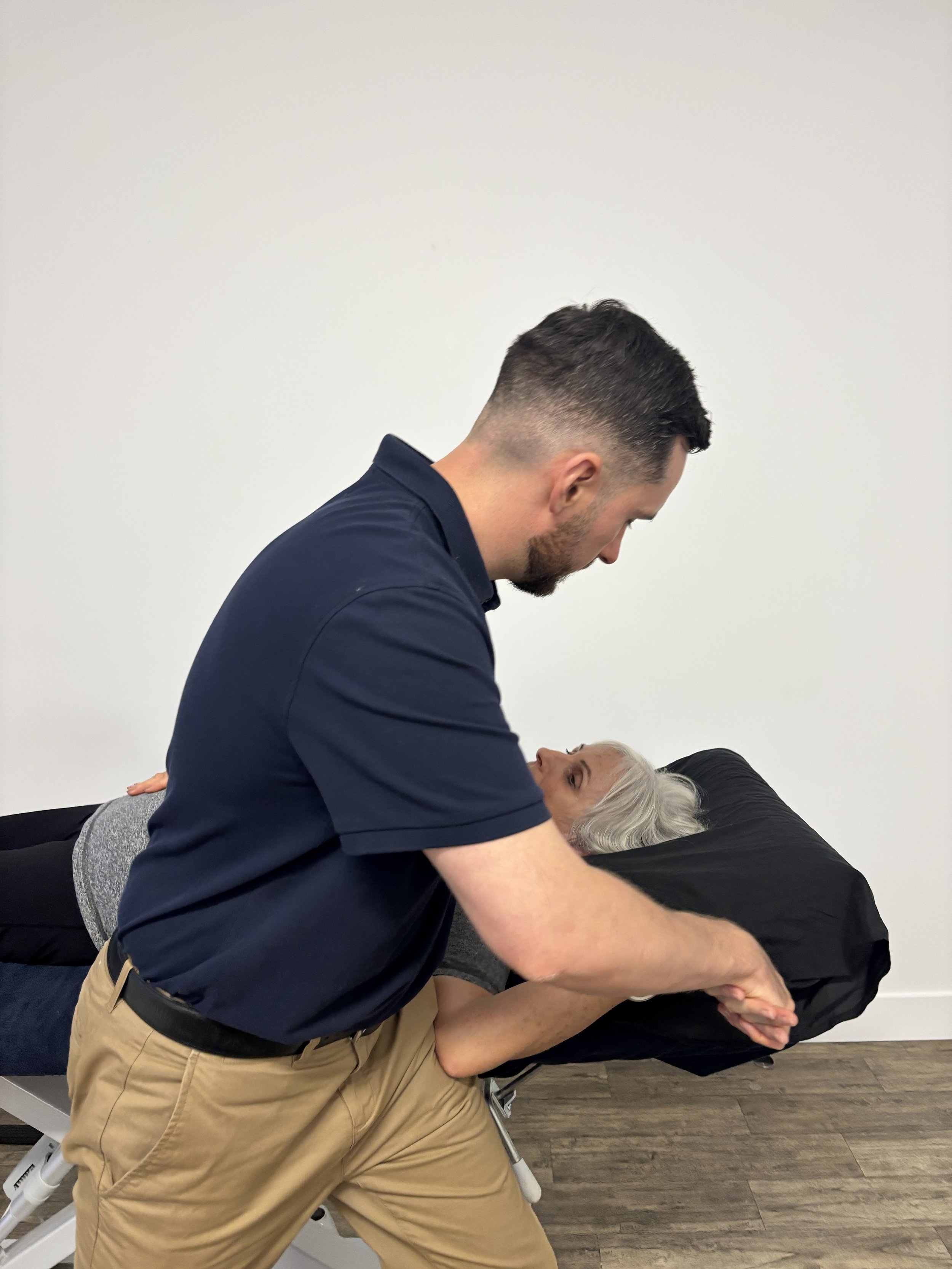
Upper Limb Tension Test for Cervical Radiculopathy
Cervical Radiculopathy vs Cervical Myelopathy — What's the Difference?
These two conditions are sometimes confused, but they are distinct — and the distinction matters.
Cervical radiculopathy involves compression of a single nerve root as it exits the spine. Symptoms are typically one-sided and follow a specific nerve root distribution into the arm and hand.
Cervical myelopathy involves compression of the spinal cord itself, not just a nerve root. It produces a broader, more serious picture — including bilateral arm or leg symptoms, gait disturbance, fine motor deterioration (such as difficulty with buttons or writing), and in severe cases, bowel or bladder changes. These symptoms require urgent assessment and prompt referral to a spinal specialist.
If you present to Head, Neck & Balance Clinic with any features that suggest myelopathy, we will identify this during our clinical screening and ensure you are directed to the appropriate level of care without delay. Red flags are always our first priority.
Frequently Asked Questions
Can an osteopath treat a pinched nerve in the neck on the Gold Coast? Yes. Osteopaths are well-placed to assess and manage cervical radiculopathy within a conservative, multimodal framework. At Head, Neck & Balance Clinic in Varsity Lakes, our assessment and treatment approach is informed by the same clinical guidelines used by physiotherapists, sports physicians and spinal specialists. We are experienced in managing the full range of presentations — from acute disc herniation to chronic spondylotic radiculopathy — and work within a clear referral pathway for cases requiring further investigation or specialist input.
How many sessions will I need? This depends on how long you've had symptoms, which nerve root is involved, and how irritable your presentation is. Many patients with acute cervical radiculopathy notice meaningful improvement within 4–6 sessions, particularly when combined with a home exercise programme. Research supports that most cases achieve substantial improvement within 4–6 months. We will give you a realistic timeline at your first appointment and reassess progress regularly to ensure treatment is working.
Do I need a referral? No referral is needed. You can book directly online at headneckbalance.com.au/book-appointment or call us on 07 5679 0638. If your assessment indicates the need for imaging, a specialist opinion, or escalation of care, we will advise you clearly and support that process.
Is a pinched nerve in the neck serious? In most cases, cervical radiculopathy is a manageable musculoskeletal condition with a very good prognosis — over 85% of acute cases resolve within 8–12 weeks. That said, we always screen carefully for signs of spinal cord compression (myelopathy) and progressive neurological deficit at your first appointment, as these represent a small number of cases that do require urgent escalation. Your safety is always assessed first. For the vast majority of people presenting to our Gold Coast clinic, conservative care is both safe and highly effective.
How long does treatment take to work? Many patients notice improvement in arm pain and neural symptoms within the first two to three sessions, particularly after neural mobilisation and manual therapy targeting the affected cervical levels. Strength and sensation changes may take longer to fully resolve. Early active management — rather than rest or waiting — consistently produces better outcomes. The sooner you seek a thorough assessment, the better your trajectory is likely to be.
Book an Appointment for a Pinched Nerve in the Neck on the Gold Coast
If you are experiencing arm pain, pins and needles, or weakness from a pinched nerve in the neck in Varsity Lakes or anywhere on the Gold Coast, we can help at Head, Neck & Balance Clinic. We will take the time to properly assess your cervical spine, identify the nerve root involved, and build a structured, evidence-based treatment plan around your recovery.
📍 194 Varsity Parade, Varsity Lakes QLD 4227
📞 07 5679 0638
✉️ info@headneckbalance.com.au
🌐 headneckbalance.com.au
Written by Jake Martin, Osteopath at Head, Neck & Balance Clinic, Varsity Lakes. Jake holds a degree in Osteopathy from Southern Cross University and is a Certified Complete Concussions Provider, with a focus on the assessment and treatment of headaches, neck pain, jaw pain (TMD), dizziness and concussion on the Gold Coast.