
Whiplash Treatment | Varsity Lakes, Gold Coast
Whiplash is one of the most common — and most mismanaged — injuries seen after a car accident or collision. If you've been told to rest and wait it out, but your neck pain, headaches or dizziness are persisting weeks or months later, you're not alone. At Head, Neck & Balance Clinic in Varsity Lakes, we take whiplash seriously and provide a thorough, evidence-based assessment to identify exactly what's been injured and what needs to be done about it.
What Is Whiplash?
Whiplash is an injury to the soft tissues and structures of the neck caused by a rapid, forceful back-and-forth movement of the head — most commonly in a motor vehicle accident, but also from contact sports, falls or other impacts. The term "whiplash-associated disorder" (WAD) is used clinically to describe the full range of symptoms that can follow this type of injury.
The cervical spine is particularly vulnerable to whiplash because it is highly mobile and supports the full weight of the head. During a collision, the neck is subjected to extreme acceleration and deceleration forces in a fraction of a second — forces that can strain muscles and ligaments, compress or irritate facet joints, stress spinal discs, and affect the nervous system in ways that produce a wide variety of symptoms. Early, accurate assessment is the single most important step toward a good recovery.
What Causes Whiplash Injuries?
The mechanism of whiplash — rapid uncontrolled movement of the cervical spine beyond its normal range — can occur in a variety of situations. Common causes include:
Motor vehicle accidents. Rear-end and side-impact collisions are the most frequent cause. Even low-speed impacts can generate enough force to injure cervical structures.
Contact sports. Rugby, AFL, martial arts and similar sports involve collisions or tackles that can produce the same rapid head acceleration forces seen in vehicle accidents.
Falls. A sudden fall — particularly backward — can snap the head and neck in a way that causes whiplash-type injury.
Physical assault. Less commonly, a blow to the head or being shaken forcefully can produce the same injury pattern.
On the Gold Coast, where commute distances are long and road traffic is heavy, motor vehicle accidents are a common cause of whiplash presentations we see at the clinic. The Gold Coast's active lifestyle — including popular contact and adventure sports — also contributes to sports-related neck injuries.
The severity of a whiplash injury is influenced by many factors: the direction of impact, the position of the head at the time, prior neck health, and how quickly appropriate assessment and management begins.
Common Symptoms of Whiplash
Symptoms can appear immediately after the incident or may be delayed by 12–48 hours. They may include:
Neck pain and stiffness
Reduced cervical range of motion
Headaches, often starting at the base of the skull
Shoulder, upper back or arm pain
Dizziness or unsteadiness
Jaw pain or difficulty chewing (TMJ involvement)
Tingling or numbness into the arms or hands
Fatigue and difficulty concentrating
Sleep disturbance
Heightened sensitivity to light or noise
Symptoms that persist beyond three months are classified as chronic whiplash-associated disorder and benefit significantly from a structured rehabilitation approach.
How Is Whiplash Diagnosed?
There is no single test that diagnoses whiplash — it is a clinical diagnosis based on a careful history and thorough physical examination. At Head, Neck & Balance Clinic, our assessment process is systematic and evidence-informed.
The first step is always a detailed history: understanding how the injury occurred, when symptoms started, how they have evolved, and how they affect your daily life. We also screen carefully for red flags — symptoms that may suggest a fracture, ligamentous instability, vascular involvement or neurological compromise requiring urgent investigation or referral.
Where there has been significant trauma, we apply validated screening tools such as the Canadian C-Spine Rule and NEXUS criteria to determine whether imaging is indicated before proceeding with hands-on examination. These tools help ensure we don't miss a fracture or instability that would change our management approach.
The physical examination includes assessment of cervical range of motion, palpation of the joints and soft tissues, neurological screening (reflexes, sensation and muscle strength), and where relevant, specific tests for ligamentous integrity and cervical artery function. Dizziness and balance are also assessed, as the cervical spine plays an important role in proprioception and gaze stability — both of which can be disrupted by whiplash.
For more information on whiplash grading and what to expect after your injury, the MyWhiplash patient resource provides a helpful overview.
How Can an Osteopath Help with Whiplash?
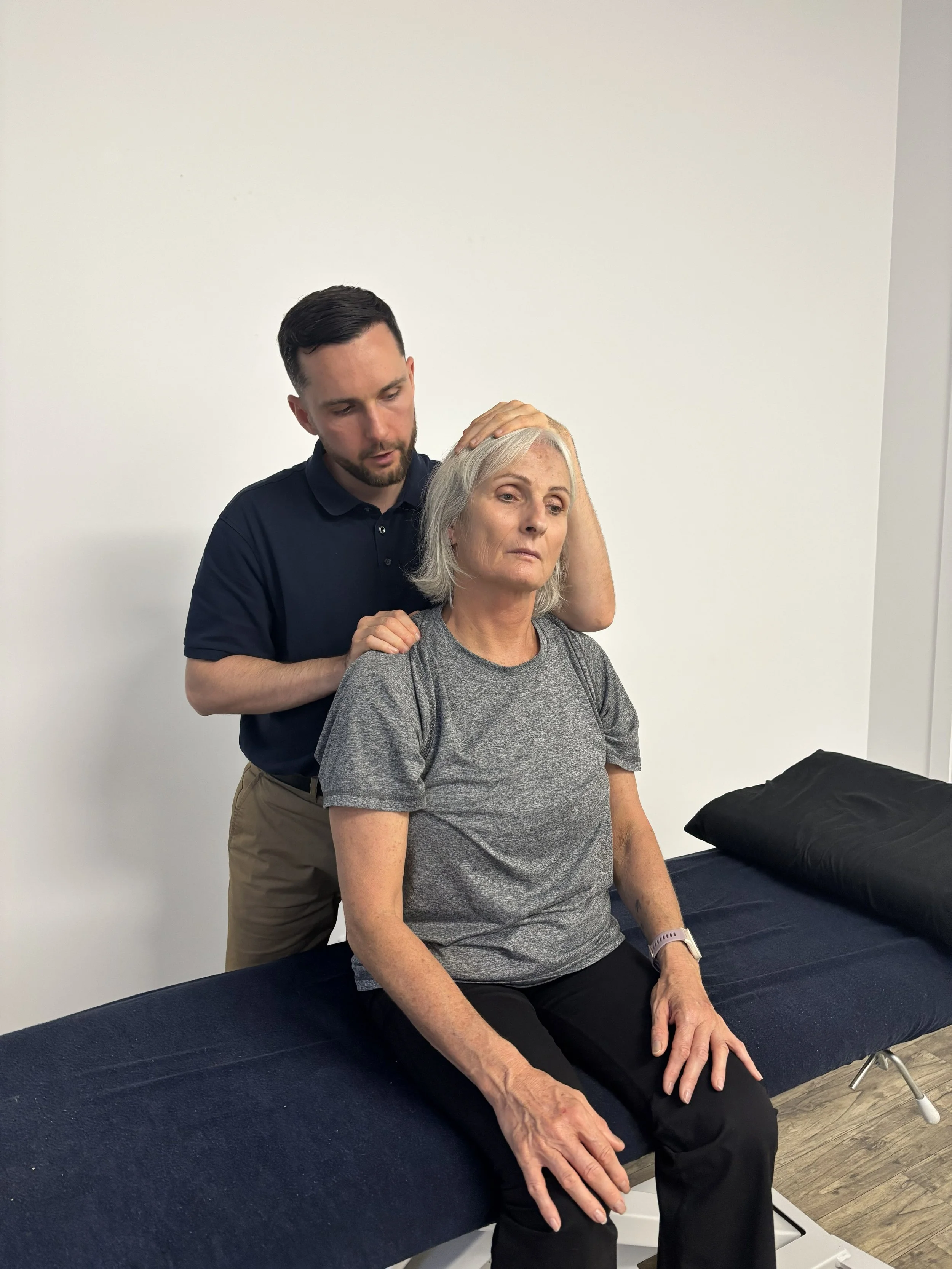
Whiplash responds best to active, targeted management. At Head, Neck & Balance Clinic in Varsity Lakes, we take a whole-system approach — assessing the neck, jaw, inner ear and nervous system together, because whiplash rarely affects just one structure in isolation.
Manual therapy. Hands-on treatment targeting the cervical facet joints, soft tissues and upper thoracic spine can reduce pain, restore movement, and address the mechanical drivers of your symptoms. Treatment is graded carefully to your irritability level — whiplash injuries are often in an acute, sensitive state and require a measured, progressive approach. Research supports the use of manual therapy in whiplash management, particularly when combined with active rehabilitation.
Cervical exercise rehabilitation. Restoring the strength and coordination of the deep neck flexors and cervical extensors is a core part of whiplash recovery. We use a structured motor control and endurance-based exercise programme, progressing at a pace appropriate to your recovery stage.
Dizziness and balance assessment. Dizziness after whiplash is common and often cervicogenic in origin — meaning it is driven by disrupted sensory input from the injured cervical structures rather than from the inner ear. We assess this carefully and include specific cervical proprioception and gaze stabilisation exercises where appropriate.
TMJ assessment. Jaw pain following whiplash is frequently overlooked. The forces involved in a collision can stress the temporomandibular joint directly. As a clinic focused on the head, neck and jaw together, we include TMJ assessment as part of our standard whiplash workup.
Psychological and lifestyle factors. Whiplash recovery is influenced by more than just physical injury. Factors such as stress, sleep, pain catastrophising and fear of movement (kinesiophobia) are well-recognised drivers of prolonged recovery. We take these seriously and address them as part of your overall care, including referral to other practitioners where indicated.
Head, Neck & Balance Clinic is the only dedicated head, neck and balance osteopathy clinic on the southern Gold Coast. If you've had a whiplash injury and feel like you're not progressing, we are here to help.
Whiplash vs General Neck Pain — Is There a Difference?
Not all neck pain is whiplash, and the distinction matters for both diagnosis and treatment. General mechanical neck pain typically develops gradually — from poor posture, prolonged sitting, occupational strain or degenerative changes — without a specific traumatic event.
Whiplash, by contrast, involves a sudden high-velocity injury mechanism that can affect a wider range of structures simultaneously: joints, muscles, discs, ligaments, the nervous system, and the vestibular and visual systems. It can also involve a psychological stress response that perpetuates symptoms beyond the initial tissue healing phase.
The irritability of whiplash injuries also tends to be higher — meaning symptoms are more easily provoked and take longer to settle. This influences how we approach treatment in the early stages, favouring gentle, graded interventions over aggressive manual techniques until the acute phase has resolved.
If you're unsure whether your neck pain is related to a past trauma, a thorough assessment at our Varsity Lakes clinic will clarify the picture and guide an appropriate treatment plan.
Frequently Asked Questions
Can an osteopath treat whiplash on the Gold Coast? Yes. Osteopaths are well-placed to assess and manage whiplash-associated disorder. At Head, Neck & Balance Clinic in Varsity Lakes, we have particular experience with post-traumatic neck injuries and take a thorough, evidence-based approach that addresses the full range of structures affected by a whiplash injury — including the cervical spine, jaw, vestibular system and nervous system. We are conveniently located on the southern Gold Coast.
How many sessions will I need? This depends on the severity of your injury, how long ago it occurred, and how many structures are involved. Acute whiplash injuries managed promptly may resolve in 6–10 sessions with appropriate home exercise. Chronic or complex presentations may require a longer course of care. We will give you a realistic picture of your expected timeline at your first appointment and reassess your progress regularly.
Do I need a referral? No referral is needed to book at Head, Neck & Balance Clinic. You can book directly online at headneckbalance.com.au/book-appointment or call us on 07 5679 0638. If your assessment indicates the need for imaging, specialist review or other investigations, we will advise you and assist with the appropriate referral pathway.
Is whiplash serious? The majority of whiplash injuries are musculoskeletal in nature and do not involve permanent structural damage. However, they can cause significant pain and disability if not properly managed — particularly when symptoms persist into the chronic phase. In some cases, whiplash can involve ligamentous instability, nerve root compression or vascular compromise, which is why a careful clinical screen for red flags is always our first step. We take every whiplash presentation seriously and ensure your safety before beginning treatment.
How long does whiplash treatment take to work? Many people notice improvement in pain and movement within the first few sessions. However, meaningful functional recovery — particularly for symptoms like dizziness, headaches and arm symptoms — typically takes several weeks of consistent treatment combined with a home exercise programme. The earlier you seek assessment after a whiplash injury, the better your prognosis. Research consistently shows that early active management produces significantly better long-term outcomes than rest and avoidance.
Book an Appointment for Whiplash Treatment on the Gold Coast
If you are experiencing whiplash symptoms in Varsity Lakes or anywhere on the Gold Coast, we are here to help at Head, Neck & Balance Clinic. We will take the time to properly assess your injury, identify every structure involved, and build a treatment plan tailored to your recovery.
📍 194 Varsity Parade, Varsity Lakes QLD 4227
📞 07 5679 0638
✉️ info@headneckbalance.com.au
🌐 headneckbalance.com.au
Written by Jake Martin, Osteopath at Head, Neck & Balance Clinic, Varsity Lakes. Jake holds a degree in Osteopathy from Southern Cross University and is a Certified Complete Concussions Provider, with a focus on the assessment and treatment of headaches, neck pain, jaw pain (TMD), dizziness and concussion on the Gold Coast.